Send your child to Spanish state schools or British international? Here’s everything parents need to know

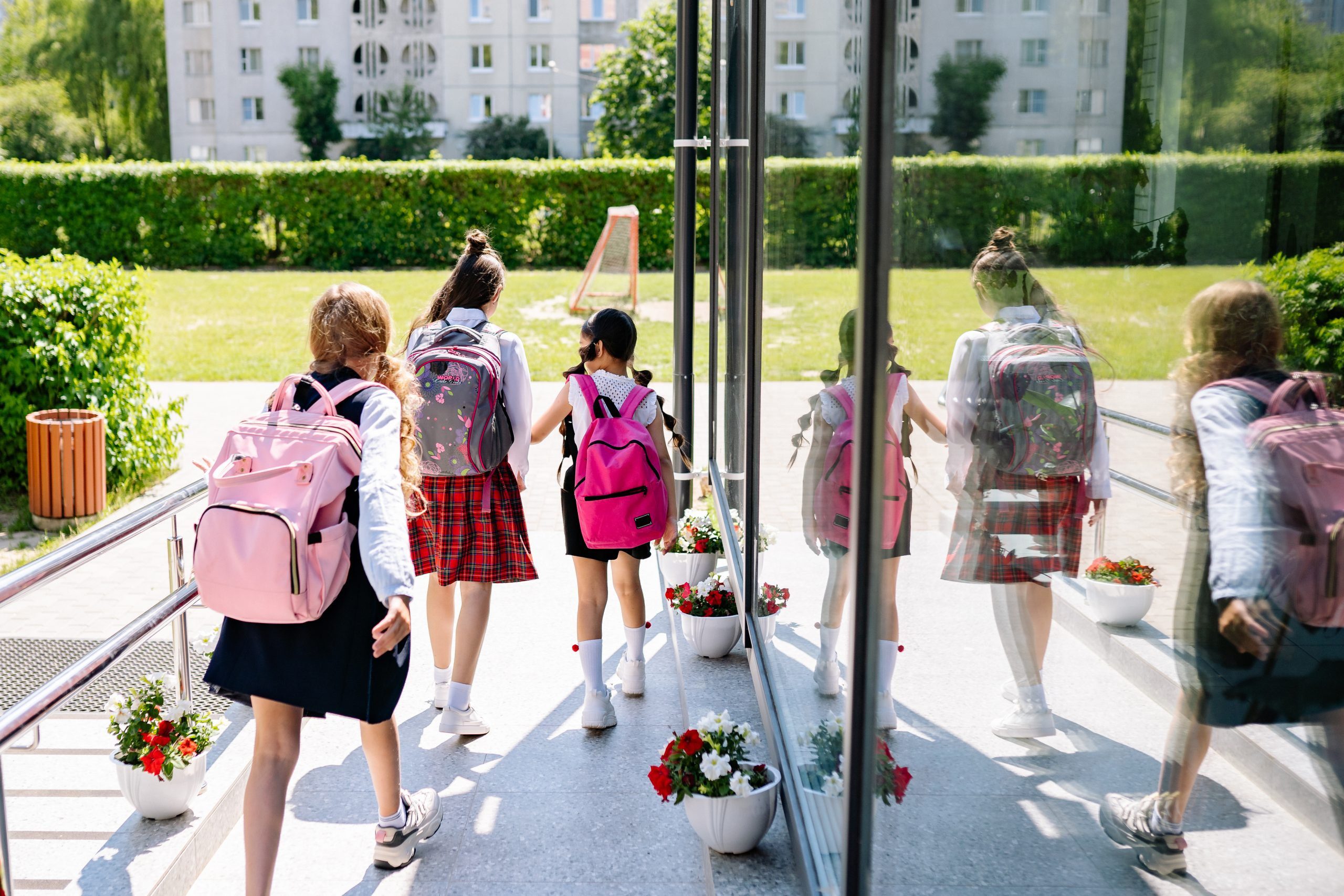
SELECTING the right school for your child is rarely straightforward, but for those choosing between an unfamiliar education system and pricey international schools it can be a particularly stressful experience.
“It’s difficult to determine the best option for your kids with each system having different curriculums as well as focus,” one expat parent who is currently searching for the perfect place for her children told the Olive Press.
So, for all you overwhelmed parents, we’ve compiled a guide to the Spanish education system, comparing it directly to British international schools.
Primary school
Spanish primary schools welcome children between the ages of six and 12 years old. These pupils embark on a six year journey divided into three cycles.
The first cycle sees heavy guidance as pupils learn to read, write and count. Then by the second cycle they begin applying these skills independently. Ultimately, in the final cycle, they dig deeper into subjects to prepare for the transition to secondary school.
In contrast, international schools in Spain introduce children to formal learning a little earlier, often starting with reception at four or five.
Students progress through Key Stage One, where they build basic literacy and numeracy skills, before moving to Key Stage Two at the age of seven.
At this point they begin connecting classroom learning to the wider world.
READ MORE: Spain will ban social media for children aged under 16 to protect them from ‘digital Wild West’
Secondary school
Spanish secondary education, which spans ages 12 to 16, is a structured four year journey divided into two cycles.
The first cycle consolidates core knowledge and introduces students to practical lessons. The second, sees them choose optional tracks that can include languages, music or technology.
Assessed continuously, through homework, class participation and exams, pupils develop a variety of skills.
Those who fail subjects can retake over summer, with a second failure leading to repeating the following academic year.
Those who pass all subjects during the course of these four years earn the Titulo de ESO, Spain’s official secondary school qualification.
In British international schools, secondary education begins with Key Stage 3 where pupils expand their core knowledge while being introduced to subjects like computing and design technology.
By 14 they are preparing for IGCSEs, exams which are completed at 16 and see pupils receive individual grades for each subject. Pupils study core subjects but are also able to select others like drama or art.
Containing little, if any, coursework, IGCSE marks are determined entirely by examinations meaning that for those who struggle under exam pressure, the Spanish system may be a better fit.
16+ education
After ESO, Spanish pupils pursue the Bachillerato, a two-year program that sees them focus on one of three pathways: science and technology, humanities and social sciences or the arts.
With pupils following a fixed track there is little flexibility.
All pupils do however study Spanish, a foreign language and physical education throughout this two year period.
Meanwhile, their peers at British international schools are working towards A Levels.
Typically choosing three or four subjects, students dive into topics that interest them and, over the course of two years, prepare for a series of summer exams.
READ MORE: 36 Hours in Avila: Discover Spain’s medieval walled masterpiece on the plains of Castilla y Leon
Looking ahead to university
Spanish schools provide a direct route to Spain’s public universities through the Bachillerato.
Bachillerato results are looked at by universities who also take into account the EBAU, Spain’s mandatory university entrance exam.
Pupils are prepared for the EBAU, in which they will need strong scores if they want to attend British universities. UK admissions teams look at EBAU results as well as proof of English proficiency.
For pupils looking for higher education abroad, international schools offer a clearer path.
A Levels students are better positioned for top UK universities, as well as US Ivy League colleges and leading institutions across Europe.
Those who wish to attend Spanish public universities, however, must demonstrate advanced Spanish proficiency and have their qualifications recognised by Spain’s Ministry of Education.
READ MORE: Class sizes to be cut in Andalucia to ‘benefit teachers and children’s education’
Beyond the classroom
Aside from their curricula, Spanish and British international schools differ greatly when it comes to student life beyond the classroom.
At Spanish schools pupils often move through cycles together and live in the same neighbourhoods.
They attend local clubs and activities and are fully immersed in the Spanish language and culture.
For those with low level Spanish settling in can take some time but being surrounded by the language, in lessons and play, means children find themselves fluent speakers soon enough.
International schools, however, see pupils from a variety of backgrounds and cultures.
This creates diverse classrooms and a welcoming culture which means friendships form quickly.
Despite their quick creation, friendships are transient with pupils coming and going and there is less integration with the local community.
Students tend to have a wider range of extracurricular activities on offer at school and therefore their social lives revolve more around school itself.
Click here to read more Education News from The Olive Press.